How does one determine the will of the people? I mean, when a legislature states with impunity that it represents the will of the people in a matter that clearly divides the people along ideological lines, can it really be taken at its word?
It is paradoxical at most to state that one represents or is capable of aggregating the will of the people. This flies in the face of the fact that the will of only a sub-section of the people are consulted, and only their views and opinions accorded the respect and attention that should have ideally been accorded to the people as a whole.
A characteristic of representative democracy is that while the representatives are elected by the people, to act in their interest, they retain the freedom to exercise their own judgment as how best to do so.
Essentially, this would mean that although the representatives are elected to represent the people, they are sufficiently empowered to determine on their own as to what constitutes public interest. It is not necessary, but is generally and ideally expected, that such a judgment would approximately mirror the 'will of the people'. That it may not is a definitely accepted possibility, but that would be one that cannot be repudiated.
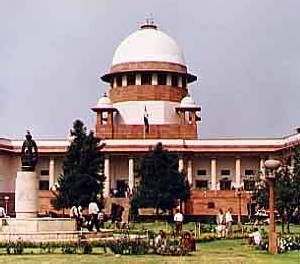
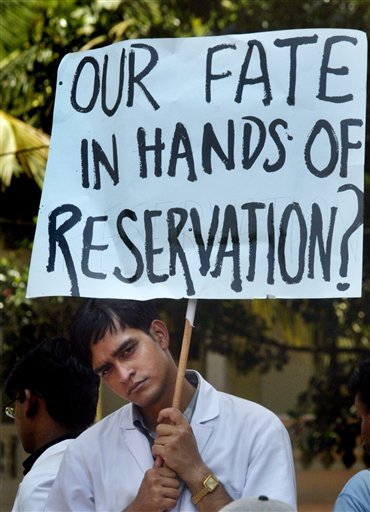
The Government, shaken after the Supreme Court stayed the reservation process for the OBC communes on technical grounds, has made an appeal that since Parliament had unanimously affirmed the legislation, it represents the will of the people. A Union Minister has even gone to extent of stating that by staying a process affirmed by the 'will of the people', the judiciary has implied that it is 'against the people'. To state that Parliament is infallible just because it is the sole representative arm of the State is to confer too great prerogatives on it.
That such an 'erroneous' interpretation may not be challenged would be a severe infringement on the liberties of the people, as it implies that even if a law be bad, it cannot be revoked simply because the legislature had approved it. Agreed that if a bill's provisos are seen and known to be bad, the people can proclaim that they would not approve of it, but what if the legislature sees such a proclamation as not truly representative of the people and insists on its own legitimacy as the sole guardians of public interest?
The concept of judicial review is based on the idea that the Constitution expresses the true will of the people, while the decisions of any particular legislature represent only the shifting, changeable will of that particular legislature. The will of the legislature may not trump the will of the people, as expressed in the Constitution, and therefore laws which violate the Constitution are void—and the judges are the people who decide whether the a law does go that far.
While I don't think that the reservation policy is a crime against the people, in its current form, it is still an aberration. It needs reform, reform which the Supreme Court has indicated viz. the basis for the caste populace calculation and the adherence to the creamy layer proviso (which would ideally ensure that only the needy get the benefits). A failure to look into these areas would be a transgression against the people for sure. Whether such a policy then truly represents the will of the people needs to be investigated.