Friday, April 06, 2007

Poem of the Day - The Daffodils - William Wordworth

I wandered lonely as a cloud
That floats on high o'er vales and hills,
When all at once I saw a crowd,
A host, of golden daffodils;
Beside the lake, beneath the trees,
Fluttering and dancing in the breeze.

Continuous as the stars that shine
And twinkle on the milky way,
They stretched in never-ending line
Along the margin of a bay:
Ten thousand saw I at a glance,
Tossing their heads in sprightly dance.

The waves beside them danced; but they
Out-did the sparkling waves in glee:
A poet could not but be gay,
In such a jocund company:
I gazed - and gazed - but little thought
What wealth the show to me had brought:

For oft, when on my couch I lie
In vacant or in pensive mood,
They flash upon that inward eye
Which is the bliss of solitude;
And then my heart with pleasure fills,
And dances with the daffodils.

- William Wordsworth

Poem of the Day - In A Disused Graveyard - Robert Frost

The living come with grassy tread
To read the gravestones on the hill;
The graveyard draws the living still,
But never anymore the dead.

The verses in it say and say:
"The ones who living come today
To read the stones and go away
Tomorrow dead will come to stay."

So sure of death the marbles rhyme,
Yet can't help marking all the time
How no one dead will seem to come.
What is it men are shrinking from?

It would be easy to be clever
And tell the stones: Men hate to die
And have stopped dying now forever.
I think they would believe the lie.
-
Robert Frost

Courtesy: Wikisource

Wednesday, April 04, 2007

Poem of the Day - If - Rudyard Kipling

If you can keep your head when all about you
Are losing theirs and blaming it on you;
If you can trust yourself when all men doubt you,
But make allowance for their doubting too:
If you can wait and not be tired by waiting,
Or being lied about, don’t deal in lies,
Or being hated, don’t give way to hating,
And yet don’t look too good, nor talk too wise;

If you can dream—and not make dreams your master;
If you can think—and not make thoughts your aim,
If you can meet with Triumph and Disaster
And treat those two imposters just the same:
If you can bear to hear the truth you’ve spoken
Twisted by knaves to make a trap for fools,
Or watch the things you gave your life to, broken,
And stoop and build ’em up with worn-out tools;

If you can make one heap of all your winnings
And risk it on one turn of pitch-and-toss,
And lose, and start again at your beginnings
And never breathe a word about your loss:
If you can force your heart and nerve and sinew
To serve your turn long after they are gone,
And so hold on when there is nothing in you
Except the Will which says to them: "Hold on!"

If you can talk with crowds and keep your virtue,
Or walk with Kings—nor lose the common touch,
If neither foes nor loving friends can hurt you,
If all men count with you, but none too much:
If you can fill the unforgiving minute
With sixty seconds’ worth of distance run,
Yours is the Earth and everything that’s in it,
And—which is more—you’ll be a Man, my son!

- Rudyard Kipling

Courtesy: Wikisource

April as Poetry Month...?

A very dear friend, whose counsel I value a lot, has said that I have become too boring a blogger. On going through my blogs for the last few months, I am beginning to agree with him, as my blogging has been restricted to social issues, which don't offer that much of a scope for humour. It is a different matter altogether that I am very bad at humour, as and when I make a try at it.But nonetheless, for the next one month, I will NOT be writing any blogs on social issues.

Now, I don't want this to seem like a hiatus or something, but I was thinking, why not make April Poetry Month on my blog. I am a bad poet, so don't worry about my creations. I was planning to put up some of the poetry that I have found to be superlative in the course of my reading. I mean, that way, my friends can get to read some good poetry and the mood stays light.
Would appreciate your comments on my idea.

Wild and endangered....

The environs in which we live are perhaps the most endangered ones. I am not jesting when I say this, what with the paucity of open spaces in our cities, forest land being appropriated in a most indiscriminate manner for ‘development’, and basic environmental norms and regulations flouted with impunity. Poachers and illicit loggers are free to roam to do their business destroying the natural heritage, while those charged with protecting it are constrained by the lack of adequate manpower, resources and an overall interfering political class.

Our environmental laws are a joke at best. Antiquated, redundant, and completely ineffective in today’s circumstances, these norms only serve to restrict our efficacy in regulating and protecting our flora and fauna from harm. Reluctance to invest in mechanisms which would modernise and consequently make the forest service more effective is perhaps the most glaring example of this myopia.

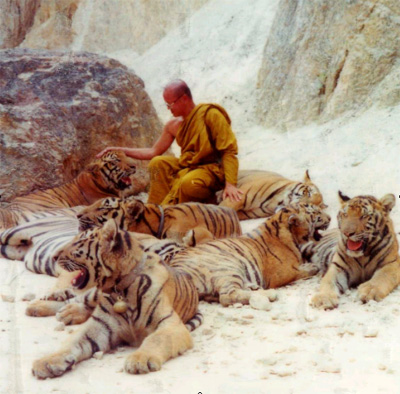
Tiger conservation, once the pride of India’s preservation movement, has now become its biggest failure. All over the place, tigers are dropping dead like flies, and I suspect we all know why. Disease may be a factor, but that doesn’t explain why only tigers are getting afflicted by it. The biggest factor that affects the wildlife is poaching. Poaching is inherently a disgusting and abominable profession. To seek wealth from the murder of such beautiful creatures, to seek happiness on earth by shedding the innocent blood of so many of these divine beings, is to forsake happiness beyond life, to be tormented in the deepest and most horrible depths of Hades, wherever it may be.

All around, forests are being cleared without care or concern to accommodate for malls, residential complexes, industrial belts, and what not. Agriculturists have been clearing forestland to increase their acreage. And all this while, our Government, “defender of justice”, has sat silent.

Ashish makes a very pertinent point when he says that we are bypassing a major opportunity to use the innate skills of the aboriginal tribes to conserve the forests and the fauna contained in them. By asking these tribes to vacate the forests, we are evicting them from an environs which they are familiar with, and in the process, destroying a system which could be used to stem the problem of poaching and illegal logging.

This cannot go on. Sariska cannot be allowed to happen again. Ranthambhore, Kaziranga, Gir, Melghat, Periyar, and other preserves call out to our attention. Should we fail to respond now, it may be too late later on. The clock is ticking.

Sunday, April 01, 2007

The will of the people....?

How does one determine the will of the people? I mean, when a legislature states with impunity that it represents the will of the people in a matter that clearly divides the people along ideological lines, can it really be taken at its word?

It is paradoxical at most to state that one represents or is capable of aggregating the will of the people. This flies in the face of the fact that the will of only a sub-section of the people are consulted, and only their views and opinions accorded the respect and attention that should have ideally been accorded to the people as a whole.

India is not a direct democracy. By definition, a direct democracy is one wherein citizens or the demos vote on all major policy decisions. In contrast, India's representative democracy does not empower the people to such an extent. I quote Wikipedia as follows:

A characteristic of representative democracy is that while the representatives are elected by the people, to act in their interest, they retain the freedom to exercise their own judgment as how best to do so.

Essentially, this would mean that although the representatives are elected to represent the people, they are sufficiently empowered to determine on their own as to what constitutes public interest. It is not necessary, but is generally and ideally expected, that such a judgment would approximately mirror the 'will of the people'. That it may not is a definitely accepted possibility, but that would be one that cannot be repudiated.

The Government, shaken after the Supreme Court stayed the reservation process for the OBC communes on technical grounds, has made an appeal that since Parliament had unanimously affirmed the legislation, it represents the will of the people. A Union Minister has even gone to extent of stating that by staying a process affirmed by the 'will of the people', the judiciary has implied that it is 'against the people'. To state that Parliament is infallible just because it is the sole representative arm of the State is to confer too great prerogatives on it.

Any representative arm is susceptible of the allure of interpreting a situation in light of their own biases and prejudices. This is irrespective of whether this interpretation is true of the general populace's viewpoint about the same.

That such an 'erroneous' interpretation may not be challenged would be a severe infringement on the liberties of the people, as it implies that even if a law be bad, it cannot be revoked simply because the legislature had approved it. Agreed that if a bill's provisos are seen and known to be bad, the people can proclaim that they would not approve of it, but what if the legislature sees such a proclamation as not truly representative of the people and insists on its own legitimacy as the sole guardians of public interest?

The concept of judicial review is based on the idea that the Constitution expresses the true will of the people, while the decisions of any particular legislature represent only the shifting, changeable will of that particular legislature. The will of the legislature may not trump the will of the people, as expressed in the Constitution, and therefore laws which violate the Constitution are void—and the judges are the people who decide whether the a law does go that far.

History is replete with examples wherein despite the presence of representative democracies, some of the most heinous crimes have been permitted to take place against the people, that too with the compliance of the legislature.

While I don't think that the reservation policy is a crime against the people, in its current form, it is still an aberration. It needs reform, reform which the Supreme Court has indicated viz. the basis for the caste populace calculation and the adherence to the creamy layer proviso (which would ideally ensure that only the needy get the benefits). A failure to look into these areas would be a transgression against the people for sure. Whether such a policy then truly represents the will of the people needs to be investigated.

I Quote...

Quote of the Day