Showing posts with label judiciary. Show all posts

Friday, March 30, 2007

Reservation woes...

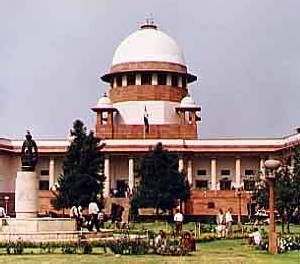
The Supreme Court has asked the Union Government to put on hold its ambitious and controversial program to increase affirmative action quotas in educational institutions. These quotas increases are mainly aimed at the Other Backward Castes section of Indian society, a section that slipped into the ambit of affirmative action after the Mandal Commission's report being implemented in 1990 by the then incumbent V.P. Singh Government. These communes were then deemed eligible for affirmative action benefits by virtue of them being socially and economically backward, as also because doing so would have been in conformity with the Directive Principles of State Policy. The percentage of seats which would be reserved for members of these communes has been fixed at 27 percent of the total, in keeping with their numeric strength as per the 1931 census.

And that is where the entire policy fell foul of the court. That a policy should be formulated keeping as its basis a census conducted more than 70 years prior has baffled the court, and not without reason. Does the Government wish to insinuate that the quantum of the population belonging to these communes has remained frozen at the same level for over a century? While it is very much possible that the communes might now comprise a reduced percentage of the total populace, and this prospect would be most attractive to those opposing these reservations, it is equally likely that they might now constitute a higher percentage.

This brings us to the main point of this blog. I have always maintained that affirmative action on the basis of commune or creed is largely self-defeating as it rarely if ever addresses the real issues, and risks being monopolized by the more affluent sections of the communes/creeds in question. The standard mode of implementation followed by the Indian state also doesn't allow for much reform on a continuous basis, something that is imperative for an affirmative action program to be deemed to be truly responsive to the needs of the communes whose troubles it wishes to alleviate.

The haste by which the Government was attempting to push this piece of legislation and its inability to answer queries on why the 1931 census and not the more recent 2001, or for that matter, even the 1991 census (in case the 2001 census' computations should still be ongoing) was employed to determine the exact percentage of seats to be reserved under the program proposed somehow suggests that the State was trying to subvert the process of natural justice in its pursuit to be seen as socially aware.

I don't wish to support such a view. The State was being its usual self: plain old incompetent. I mean, it's a cardinal rule that you base your calculations on the most recent data, data which would, logically, be the most accurate approximation to the current situation. Then how could the State mess up so badly?

This blog has always stated its support for affirmative action based on economic considerations. While economics alone cannot be deemed to be enough, by that record, even a communal identity should also not be enough. The case for economics as 'one' of the parameters, and perhaps this being already a part of the system by way of the 'creamy layer' proviso, is strengthened by the fact that while it is accepted that the designated communes do suffer from a systemic bias against them, once a member becomes sufficiently emancipated by way of his financial and social status, the member shouldn't then be able to claim the benefits of affirmative action. Should such a member's offspring, by some quirk of fate, again fall short of the emancipation definition, then the same would become eligible, but not if the same continues on the same level as the parent.
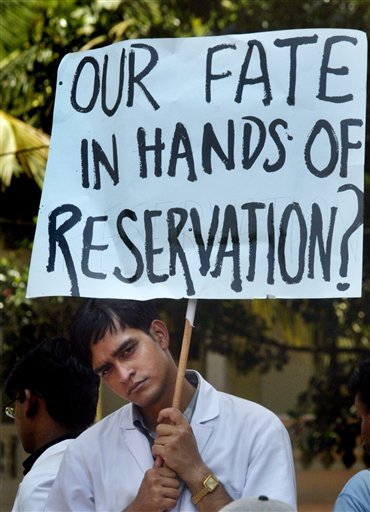
The problem doesn't lie so much with the intention behind the approach, as in the manner in which the issue is sought to be resolved. This is not an issue which can be resolved overnight; reservations or affirmative action cannot be seen as the panacea for the issue. At best, it is one manner of reaching the goal, but it needs to be supplemented with more concrete measures to remove or reduce the institutionalized biases which make coercive measures such as the one proposed by the Government necessary and required. Till such time, reservations are at best a piecemeal alternative, incapable of satiating the hunger of the designated classes for emancipation.

Wednesday, December 20, 2006

Justice is served.

Justice is deemed served only when the victims feel a sense of closure. It is imperative that one understands that while justice may be delivered, by virtue of a sentence or a verdict, it may still remain far from allaying or soothing the angst of the victim(s), if it doesn’t take into consideration their emotions, and merely judges the issue on the basis of cold facts.

The Jessica Lal case, which has rocked India, has come to an end. Some would exclaim the ultimate conviction of Manu Sharma and his accomplices as the victory of justice, and a reaffirmation of the trust that the common man reposes in the corridors of the judiciary. Some would see this as another indication, another vindication of the principle that all are equal before the law, be they a king or a commoner. And quite rightly they believe so.

And yet, 7 years is too long for justice to be served. In these years, the parents of Jessica Lal passed away, in wait of their daughter’s murderer’s conviction. Allegations of the most reproachable and reprehensible manner have been leveled against the late Ms. Lal herself, and not much was said or done about the one who made these comments. Evidence was tampered with, and the entire judicial process mocked at. What absolute power can achieve if it wishes to do so is aptly demonstrated by way of the manner in which the convicted tried to subvert the system. That despite all this, justice was delivered is in itself a matter of pride, a matter of great celebration.

The family of Ms. Lal had declined to ask for the death sentence for the convicted, on ideological grounds. So, life imprisonment for them is a just punishment, and perhaps somewhere these beliefs of theirs must have weighed heavily with the court when it took the decision of whether to pronounce the death penalty or life imprisonment.

I am a supporter of the death penalty, and advocate it being used to punish those who commit the most abominable crimes, such as pedophilia, patricide, matricide, and even rape. Homicide involving torture of the victim also ought to qualify, as it isn’t simply an act of passion therein, but a coolly planned crime, aimed at causing the greatest degree of horror.

But in this case, the rarest of rare criterion is inapplicable, simply because this was a crime of passion with no ulterior motive behind it. And I do not find it odd to say that by declining to punish Mr. Sharma by way of the death penalty, the court has judged rightly, and judged solely on the basis of the facts before it, and not on the media outcry and the public sentiments associated with the case. The fears of the defense counsel have been shown to have been unfounded, and one’s faith in the judiciary has been reaffirmed once again, manifold.

Tuesday, December 19, 2006

Judging the judges...

The Judges (Inquiry) Bill, which has been introduced in the Lok Sabha, is a landmark bill, and will definitely cause some serious changes, should it get passed. The bill aims to deal with the problem of the lack of a suitable resolution mechanism vis-à-vis complaints of misbehaviour of Supreme Court and High Court judges.

Till date, the judiciary has remained beyond such introspection, as the incidence of such acts itself was very low, and hence actually setting up a mechanism to deal with them was deemed a time-consuming, and ultimately redundant process, which could best be avoided. But now the amount of complaints that have arisen against judges alleging their complicity and at times a biased outlook calls for some serious re-evaluation of the system itself.

One must not fear that this system could be the precursor to a systematic politicisation of the judiciary. If anything, this reinforces the principle that most of the wings of the State practice, that an organisation is best suited to deal with the misdeeds of its members. The Civil Services have their Administrative Tribunals, the Armed Forces their military tribunals, so why not the judiciary have its own tribunal to deal with those who deviate from its codes of conduct?

I have, in all my preceding blogs, been a fierce proponent of a strong judiciary. But, I do not find this decision of the Union Cabinet to be harming the strength of the judiciary in any way. On the contrary, it will improve the accountability of the judiciary and prevent the misuse of the powers and privileges vested in the judges by the Constitution. This becomes a most remarkable concept, because then truly no one is above the law in India, not even those who are to judge by the basis of these laws.

That this bill’s tabling comes so soon after the Supreme Court of India has suggested the inapplicability of constitutional protections accorded to members of Parliament, ministers and bureaucrats, especially in cases wherein the individual concerned is alleged to have broken the law, as also within a day of the Union Law Minister’s defence of the judiciary’s power of review, as also his repudiation of charges of judicial activism is also significant, because it firmly establishes that while the judiciary is critical of the protections which have been misused by guilty politicians, it is open to reform within its own house. It would have been unfortunate had the judiciary chosen to oppose this move, but that they have chosen to support it is a sign of their maturity and of their willingness to subject themselves to scrutiny. Whether this maturity lasts, and whether this scrutiny works to the advantage of the nation, only history will tell.

Saturday, December 09, 2006

Judicial activism, say you?

The decision of the legislative and the executive to launch a joint attack on the judiciary for what they term as unwarranted judicial activism shouldn't come as a surprise to anyone. After all, when such skirmishes have occurred barely 2-3 years after the birth of the Indian nation, that things should now come to this is neither a matter of surprise nor of astonishment. However, it is definitely a matter of concern.

The Constitution is clear in its demarcation of powers between the legislature, the executive and the judiciary. The legislatures are empowered to create laws, the executive to implement them, and the judiciary to ensure that all and any laws created are within the ambit of the Constitutional framework, as also that the executive is implementing the laws in the best and most effective manner. There is no ambiguity in this matter.

The authority of the judiciary to review the statutes created by the legislatures empower it to strike down such statutes as may be deemed as violating the provisions of the Constitution. Judges may strike down a statute, sure, but on what reason? And who is to say that their interpretation of the provisos of the Constitution is correct?

The judiciary may basically adhere to either of the two most prominent interpretative theories in law, viz. strict constructionism and living constitutionalism. Basically, the former asks of the judiciary to view statutes solely in view of their actual content, and not question the motive or intent of the legislature behind bringing about the said statute. They may only view the validity of the statute in terms of its adherence to the letter of the Constitution. The latter on the other hand grants the judiciary the right to interpret the statute in view of the Constitution provisos, but at the same time, keeping in mind whether the provisos with regard to the present have been adhered to, i.e. whether the statute adheres to the spirit of the Constitution.

Whether the Indian judiciary follows the constructionist or the living constitutionalist approach is a matter of study. The current judicial environment points towards a slightly constitutionalist tilt, but whether this tilt can be viewed as activism is debatable.

Chief Justice John Roberts of the United States Supreme Court has made a very poignant statement regarding judicial activism. He says and I quote, “Judges are like umpires. Umpires don’t make the rules; they apply them. The role of an umpire and a judge is critical. They make sure everybody plays by the rules. But it is a limited role. Nobody ever went to a ballgame to see the umpire.” But this doesn’t mean that the judiciary may not discharge their responsibility of interpreting the law and enforcing the limits the Constitution places on either the legislature or the executive. Judicial vigilance in upholding constitutional rights is in no sense improper activism. It is not judicial activism when the courts carry out their constitutionally-assigned function and overturn a decision of the Executive or Legislature in the course of adjudicating a case or controversy properly before the courts.

The courts, in having convicted two sitting Members of Parliament, have displayed maybe a sense of activism, but whether it is unwarranted activism is a matter of introspection. The legislature is deemed the representative of the people, and that within its folds, protected by its privileges, individuals continue to display wanton disregard for the law, flouting it day in and day out, is a distressing and disturbing thought. In such a matter, should not the judiciary be empowered to strike down or at least strip such individuals of such unjustifiable protections? Should not it be allowed to demonstrate that although Parliament is supreme as regards the law, it is Salus populi suprema lex esto (let the good of the people be the supreme law), which is the ultimate guiding principle?

The question is laid, and answers are sought. Time will tell the fate of this conflict.

Thursday, December 07, 2006

Justice restored.

The Lady would be pleased today. For once, those who had always been beyond her pale, those who had refused to submit to her diktats, those souls now tremble at her feet, wondering what greater travails she will choose to inflict on them.

The conviction of Mr. Shibu Soren, 'distinguished' member of the Union Cabinet of Ministers, and 'father' of the State of Jharkhand, by a sessions court in Delhi, in a kidnapping and homicide case, and his consequent life imprisonment is a sign that India may be a flawed democracy, but it's flaws have a long way before they may be deemed sufficient to overpower reason altogether. That there are protesters who are declaring the 'innocence' of Mr. Soren doesn't deny this fact; rather it was expected, as Mr. Soren is after all a politician, a leader of the 'masses', and would be expected to find some support from amongst them.
But then I pray that there be no miscarriage of justice, that no laws be passed to overrule such revolutionary convictions, wherein an incumbent member of the Executive has been charged with homicide in cold blood, and has received the second highest form of punishment possible under the Indian Penal Code.
Let this judgement serve as a reminder to both the Executive as also the Legislature that they are at best the representatives of the people, their legates in the halls of power and authority, not their overlords. Let them know that the people have enshrined in their hearts the slogan of ancient Scotland, Nemo me impune lacessit (No one wounds me with impunity). Let this judgment be a wake-up call for all those who know where the rot lies in the system, and cause them to start cleaning it up, not just for this generation, but for generations to come. Let not the Lady be forced to pull on her blindfold again; let this be her prerogative, not her misery.

Friday, October 28, 2005

Battle between equals!

The recent tiff between the judiciary and the legislature, and to that effect, the executive, brings to fore the increasing tensions between the two wings of governance. On one hand, where the executive is responsible and accountable to the legislature on a daily basis, the legislature is accountable to the people only once in 5 years, or if the people's luck favours them, earlier than that. The people nowadays are peeved at the manner in which the legislature, and by implication, the executive, is running the country. The judiciary, as a consequence of its role as the guardian of the Constitution, is and has been compelled to intervene on the entreaties of the People in the very act of governance of the State.

Very recently, when the Bombay High Court passed its landmark judgement on the Mumbai Mill Lands Case, wherein it castigated both the Government of Maharashtra and the Brihanmumbai Municipal Corporation for having abdicated their responsibilities towards providing low-cost housing facilities, open spaces, and liveable conditions to the people of the city of Mumbai, the activism of the judiciary was starkly illustrated. On the same day, nearly 17 articles were found in the Times of India regarding some direction from the courts to the Executive on matters strictly non-judicial. The judgement of the Supreme Court of India regarding the rights of the heirs of a tenant to the tenancy also cleared up the air regarding the most vexing issue, which often became a major election-time concern, yielding precious votes. That the heirs of a tenant cannot by implication claim inheritance of the tenancy could have been stated even by a ordinary citizen, and the judges shouldn't have been bothered, but the fact remains, when you have such a spineless legislature, and your executive is derived from such an assemblage, your only recourse can by the judiciary.

And yet, the fact that the judiciary has to resort to such activism doesn't call for celebration. True, this indicates that our democracy is vibrant, that it is responsive to the needs of the People, and that not all hope is lost. But, in truth, attempts should be made to ensure that the judiciary can concentrate on matters more attuned to their duties, as indicated in the Constitution. Cases are pending in the highest court of the land for the last 20 years, and in lower courts for more than five decades. These cases may not be of so much political significance, maybe even their outcome may not change the course of the nation's history, but for the plaintiff and the defendant, the case is all that matters. These cases should be dealt with first, and that the judiciary also acknowledges this, implies the serious need for the Executive and the Legislature to get their act together.

The former Chief Justice of the Supreme Court, R.C. Lahoti had, in one of his press comments, remarked that the Courts weren't subservient to any of the arms of the State; rather they were equal partners in the governance of the State. Furthermore, in a most bitter comment on the conflict between the judiciary and the Executive-Legislature combine, he remarked that if the combine so much as despised the judiciary's manner of working, they should close down the courts, and abrogate the duties of the same. And this is saddening. One of the few arms of the State which are actually working is being bullied into replicating the inefficiency of the laggards. Although I have titled this blog as a battle between equals, that the combatants are equals only in name is clear. Only the victor will be neither, for the People need a responsive Judiciary as also a responsible Executive-Legislature. One prays that this battle end in a draw, a mature draw.

I Quote...

Quote of the Day